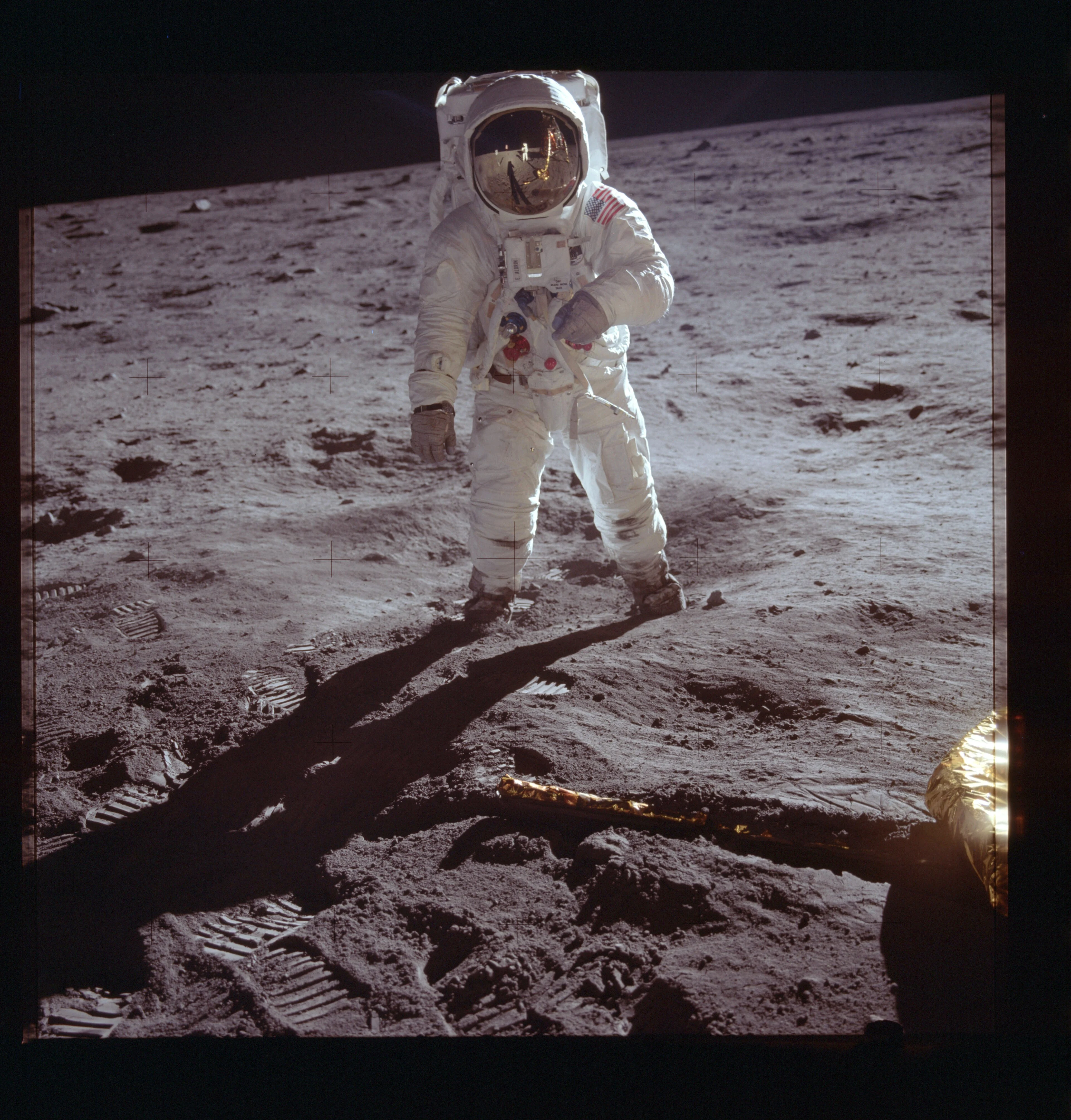
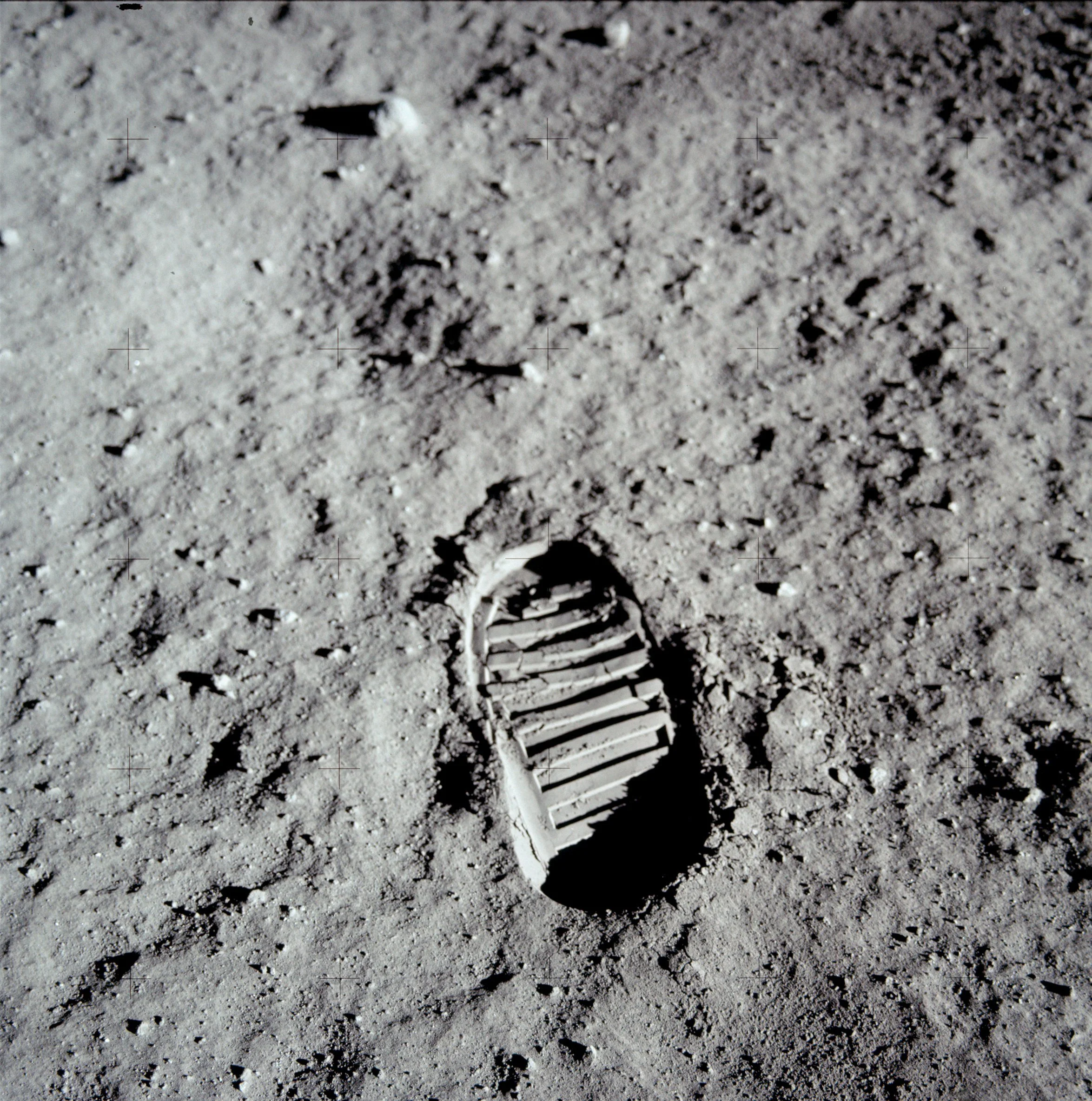
On July 20, 1969, Apollo 11's Lunar Module Eagle touched down in the Sea of Tranquility, fulfilling a national goal set by President John F. Kennedy in 1961: land astronauts on the Moon and return them safely to Earth. Six hours and thirty-nine minutes later, Neil Armstrong became the first human to set foot on another world.
This page documents the mission's exact landing coordinates, full crew, and timeline, drawn entirely from NASA's official records. You can see Tranquility Base marked at its precise location on SatFleet Live's interactive 3D Moon map, alongside every other historic landing site and live lunar orbiters.
Quick Facts
| Mission | Apollo 11 |
| Agency | NASA |
| Launch | July 16, 1969, Saturn V, Kennedy Space Center |
| Landing | July 20, 1969, 20:17 UTC (4:17 p.m. EDT) |
| Landing site | Tranquility Base, Sea of Tranquility (Site 2) |
| Coordinates | 0°41'15" N, 23°26'00" E |
| Spacecraft | Command Module Columbia, Lunar Module Eagle |
| Time on lunar surface | Approximately 21.6 hours |
| Moonwalk (EVA) duration | 2 hours, 31 minutes |
| Splashdown | July 24, 1969, Pacific Ocean, recovered by USS Hornet |
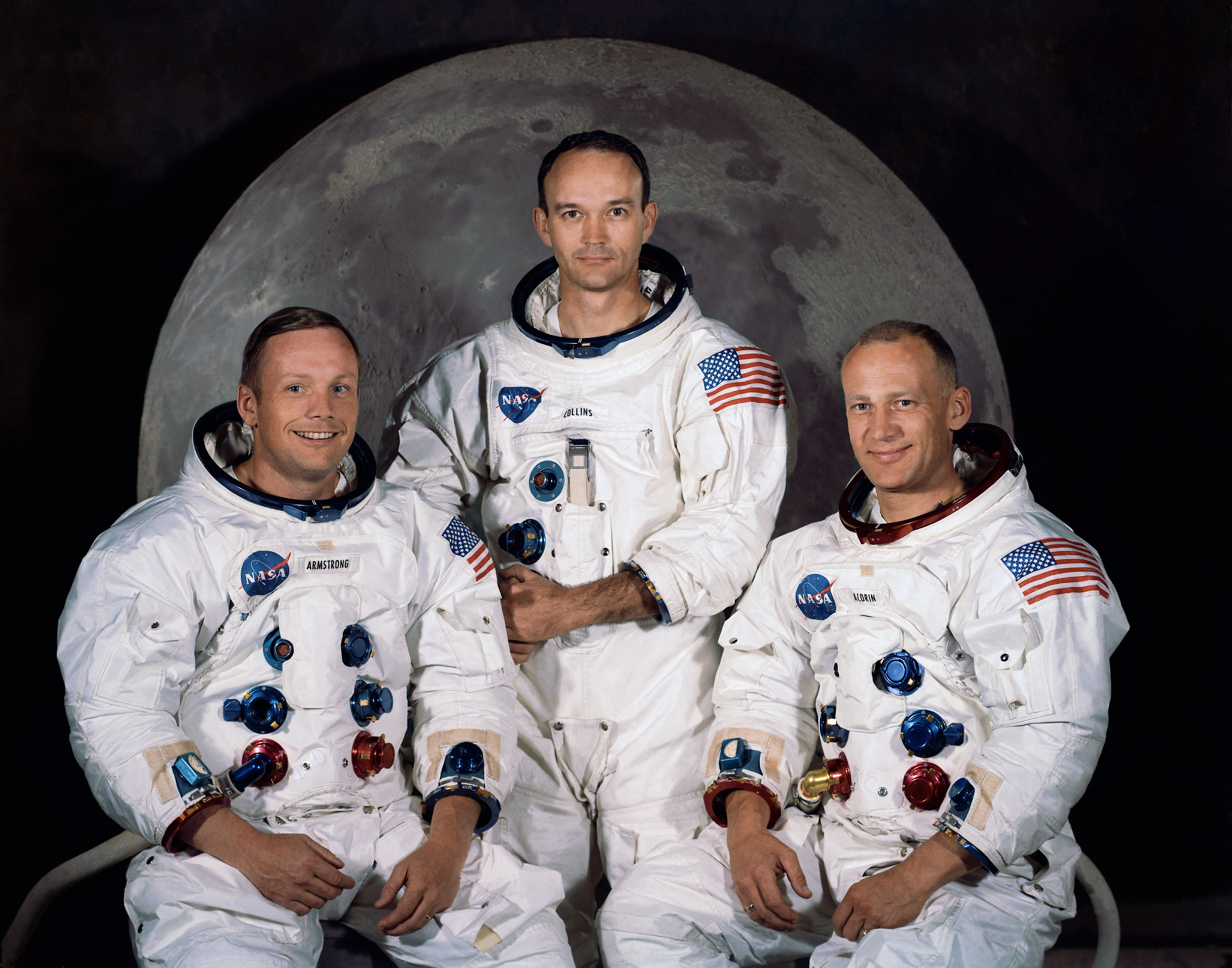
The Crew
Mission Timeline
- Jul 16, 1969Launch aboard a Saturn V rocket from Kennedy Space Center.
- Jul 20, 1969Powered descent begins as the Lunar Module Eagle separates from Columbia and begins its approach to the surface.
- Jul 20, 1969, 20:17 UTCEagle lands in the Sea of Tranquility. Armstrong radios: "Houston, Tranquility Base here. The Eagle has landed."
- Jul 20, 1969Armstrong steps onto the lunar surface, followed 19 minutes later by Aldrin. The two spend 2 hours and 31 minutes outside the Lunar Module.
- Jul 21, 1969Eagle's ascent stage lifts off from the lunar surface, leaving the descent stage — and its commemorative plaque — behind.
- Jul 24, 1969Columbia splashes down in the Pacific Ocean; the crew is recovered by the USS Hornet.
What They Left Behind
Before leaving the surface, Armstrong and Aldrin deployed a television camera, a solar wind composition experiment, and a seismic experiment package, and planted a U.S. flag. On the Lunar Module's descent stage — permanently left on the Moon — they unveiled a plaque reading: "Here Men From Planet Earth First Set Foot Upon the Moon. July 1969 A.D. We Came In Peace For All Mankind."
The astronauts collected approximately 46 pounds of lunar rocks and soil, returned to Earth for scientific study — samples that scientists continue to analyse using techniques that didn't exist in 1969.
Frequently Asked Questions
Sources
- Apollo 11 Mission Overviewnasa.gov
- Apollo 11 Lunar Surface Journal — Mission Overviewhistory.nasa.gov
- Apollo 11 — NASA History Officehq.nasa.gov
Explore More
See Tranquility Base in 3D
Explore the exact landing site alongside every other Apollo, Luna, Surveyor and Chang'e mission on an interactive Moon globe.
Open the Moon Tracker